Thursday, January 9, 2014

American Civil War: How 'The Good, The Bad and The Ugly' Can Teach You Something About the Civil War

My all-time-favorite movie, The Good, The Bad and The Ugly, is settled in the time of the American Civil War. However, the war itself is not the center of attention in the storyline. But the protagonists take advantage of certain situations relating to the war by pretending to belong to one party. The first time they do that is when they put on uniforms of dead soldiers to get treated in a nearby military sanatorium after having suffered wounds during another story. After their recovery, they head to a cemetery in which a treasure is supposed to be buried. However, on their way, they come across other soldiers:


Until this scene, I hadn't realized that each side of the Civil War had different colored uniforms and what these colors meant. So for the rest of the movie, there were only the "blue ones" and the "grey ones" for me. I looked them up: the two sides are the Confederate soldiers and the Union soldiers, as we know from the chapter War of Northern Aggression. If I understood it correctly (it seems there were various uniforms in various colors), the Confederate soldiers are those in the gray uniforms, thus soldiers of the Confederate States from the South. The Union soldiers are those in the blue uniforms from the North, who are taking Tuco and Blondie as prisoners of war.

In this movie, before having been taken prisoner, Tuco (the one with the fake eye-patch) says three things that should prove the soldiers that he is a true Confederate soldier. The first is "To hell with General Grant!" that refers to the most successful Union general Ulysses S. Grant. He continues, with a bit of help from Blondie, "Hurrah for General Lee!" that refers to Commander of the Confederate Army of Northern Virgina Robert E. Lee. The third claim to make the approaching soldiers believe that he is a Confederate soldier, is the sentence "God is with us because he hates the Yanks too!" -- Yanks (the singular form is Yankee) is, according to Wikipedia, an informal term for the Union soldiers or Northern Americans in general. So basically, Tuco did everything right, except that his audience was the wrong one.

As you can see, there is not only superb storytelling and tough gunslinger-action, but also historical accurateness in "The Good, The Bad and The Ugly". But I had expected nothing less from director Sergio Leone. Did I already mention that this is my all-time-favorite movie? If not, now I have.

Register: "Hallo, Du!" or "Grüßgott, Sie!"


Marianne wrote an interesting post about the usage of "Du" and "Sie" (the formal and informal "you") in the German language, in which she is wondering why people in Austria are more and more skipping the "Sie" when talking to strangers. This made me think: do we Austrians actually know why and when we do that?

Personally, I often struggle with the question whether I should address a stranger with "Du" or "Sie". If people are younger than me, my age or only slightly above it, I address them with a simple "Du". However, at work -- I work at a very popular fashion store on Saturdays -- I try to avoid addressing customers directly at all because I am not sure about which "you" to choose. Normally, I go with a "Du" for young people and people up to about 40 years who seem open-minded and friendly by their appearance and/or behavior. However, people in suits and grumpy people get a "Sie" instantly. There are mixed versions too though which often leads to me switching between both "Du" and "Sie" during the whole conversation, which is sometimes quite awkward. It might be really superficial, but to me it seems that it works most of the time.

Another choice between word that goes with that is also the difference between "Hallo" and the Austrian "Grüßgott". At work, this often seems to be the bigger issue because you can sometimes avoid addressing customers directly and thus also the Du-Sie-question. But greeting in retail and customer service is crucial to leave a good impression, especially at the cash register. Sometimes people feel offended when they get greeted with a simple "Hallo". I even experienced a young girl a bit younger than my age insisting on me saying "Grüßgott" to her instead of "Hallo", which I found quite ridiculous because, to me it seems that "Hallo" is a rather neutral greeting and not really offending.

Maybe it is just me and in truth there is a clear rule for when to use "Sie" and "Grüßgott" and "du" and "Hallo". At work, however, I will still stick to  my superficial analysis of people's appearances. And when it comes to greeting, I simply say "Hallo-Grüßgott" to almost every customer. As for my greeting system outside work, I can't really tell. I guess it is mostly a "Hallo", except, of course, for far older and/or respectable people. That's probably how most of young Austrians handle the politeness-versus-friendliness-situation. We all might not really sure about when to use what.

What is your approach on that?

Sunday, November 10, 2013

Revisited: Me as a Language Learner

Dear Fiona, 
Compared to what I wrote about being a language learner last year, there aren’t that many differences in comparison to the learner I am today. Obviously, strengths and weaknesses don’t change overnight, but I had hoped that there would be a bigger difference compared to my thoughts from last year. 
I’m still mighty proud about my passive language skills such as listening comprehension, and I would still consider them as my strength, whereas I’m still stuck with my low self-esteem when it comes to talking. I just can’t get out of my comfort zone and, for example, do pronunciation exercises on my own. Especially in Russian, my second foreign language, talking out loud is something I’m afraid of, while writing a text spontaneously is not difficult for me, even if it might be full of mistakes. Sadly, I feel that the fear of embarrassing myself has become even worse since last year. However, generally, my strengths and weaknesses are still the same. 
When it comes to studying, I luckily have found a good way that works for me: writing texts in which new structures and vocabulary are used. This way I get a context in my head, which helps me memorize these better. Unfortunately, I still tend to procrastinate so much that I’m usually left with great amounts of new information that is nearly impossible to get into my head in a short time.  
Therefore, the real threat to studying efficiently is my laziness. This is actually the most crucial thing that I need to change to become a successful language learner: get off my lazy bottom and reach my full potential! 
- Alexandra

Wednesday, November 6, 2013

The Lernen To Talk Show!

This is what it looks like to learn a language in one year. from Mickey Mangan on Vimeo.

A few weeks ago, we were talking about language learning in class and came up with several approaches and qualities that are more or less required to learn a language successfully. One of the more useful qualities we mentioned was the joy to talk and to be sociable in the desired language.

An ideal example for becoming successful by being talk-active is Mickey Mangan: he moved from the U.S. to Germany for a year in order to learn German by simply talking to native speakers. He documented his process on camera week by week on his blog. By that, he created an interesting series of episodes which show how a person with hardly any German skills becomes quite fluent within a year. I think he also proves that talking is helpful to attain a language.From a language learner's perspective, it is really motivating to see how much progress can be made in a relatively short time.

For comparison, here is the first and the last episode of his series:


On his blog, he also listed his personal favorite episodes (you need to scroll down a bit further). When you click on the blog entries, you can also read his commentary and thoughts about particular videos, in which he also corrects himself or explains what he was trying to say.

One episode I liked is one in which he talked to the the German voice actor William Cohn. It is not only my favorite episode because I like William Cohn, but also because he says such nice and motivating things.


Inspired by this series, I have realized that talking in the language you are trying to learn is so much more important than I thought. Talking cannot be compared to simply reading or writing a text. When you talk, you have to be quick in your thinking to make correct connections. I feel that I sometimes memorize things better when I say them out loud than when I just write them down.

In my second foreign language, Russian, speaking is still something I am scared of. So talking out loud is definitely something I should do more in Russian.

Saturday, October 26, 2013

Pretending to be in an Infomercial: Online Dictionaries!


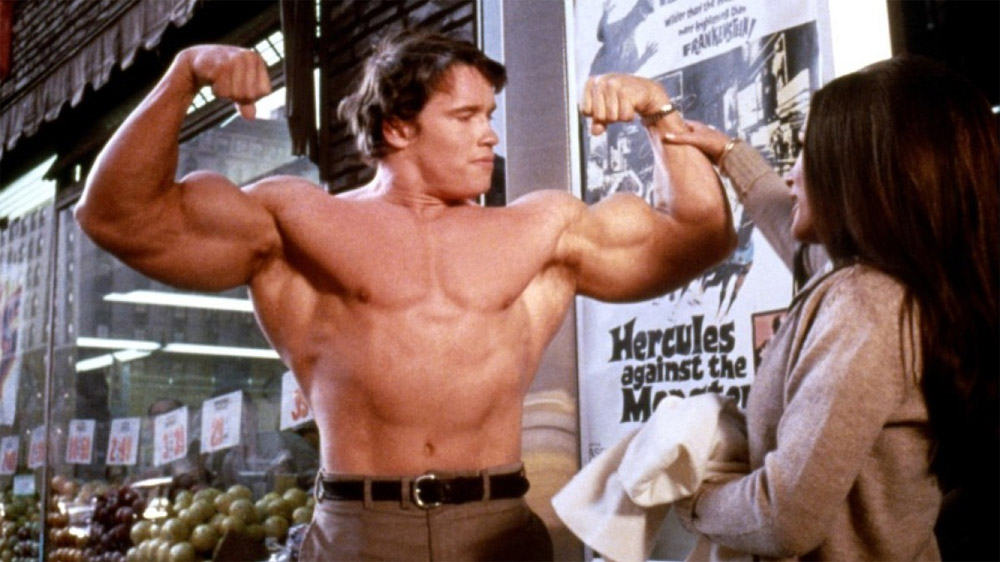
Hearing your recorded voice is one of the most awkward things there is. It always sounds so much different from what you expect from your own voice. It gets even worse if you hear it in an other language than your mother's tongue, and far more worse if you know that your fellow students will listen to it. Probably over and over again. And that they will point and laugh at you for sounding like Arnold Schwarzenegger (you have to watch this video). Well, the last bit might be a bit exaggerated, but this is basically what I felt after having heard my recording from when we were presenting and reviewing online dictionaries.

There was not much time to rehearse or write down what we were going to say. And naturally, we were all very nervous. To make things worse, I could not stop thinking about these infomercials on television with their over-excitement and over-fascination for their products. And then I could not stop pretending to be one of them. This is a transcript of what I said:
Hello everyone! We want to introduce you to OneLook, the Dictionary Search! Okay, at first it really looks scary and very ... white. And this is why we do something very important in the beginning: we change the background color! So let's change it to pink. Now it looks much more friendlier, doesn't it?

Okay, so we have several ways to look up a word. For example, you can just put in the word, or you can put in the end or the beginning of the word. Or maybe, when you are just solving a crossword puzzle, you can type in the first and the last letters and it will provide you with a solution. But we will just stick to the basics and type in 'bird'. Okay, Christine, what is this all about?

Okay, but what about the following situation: I have a definition or I want a synonym for something ... Christine, eh, sorry, Suzanna: do you have a solution for this problem?

So that's really great, but in conclusion: what are the several positive things about OneSear-- eh, OneLook.com?

Okay, and the negative aspects? Maja, do you know any negative aspects?

So, all in all, we can say: take one look at OneLook!
I have to admit that talking like that made things a bit easier and more fun, but it made me concentrate less on my speaking. With my grammar and my choice of my words, I am quite satisfied though. It was not overly impressive, but I think I used a nice variety of sentence structures and talked quite fluently. There is definitely room for improvement, but after the first shock of hearing my voice talking English, my grammar and word choice were one of the more pleasant parts of this kind of experiment.

Less pleasant was my pronunciation. There were a few words that I pronounced horribly and in a very German way, like "dictionary" or "aspects". I now fear that I might be always talking like that and that it was not just out of nervousness. Prior to hearing myself, I had actually thought that my pronunciation had improved a while ago. Having now being proved the opposite, I will definitely record my English-speaking voice more often and work on getting rid of the vibe of a Hercules in New York (no, really, you have to see this video) in my pronunciation.