Sunday, November 10, 2013

Revisited: Me as a Language Learner

Dear Fiona, 
Compared to what I wrote about being a language learner last year, there aren’t that many differences in comparison to the learner I am today. Obviously, strengths and weaknesses don’t change overnight, but I had hoped that there would be a bigger difference compared to my thoughts from last year. 
I’m still mighty proud about my passive language skills such as listening comprehension, and I would still consider them as my strength, whereas I’m still stuck with my low self-esteem when it comes to talking. I just can’t get out of my comfort zone and, for example, do pronunciation exercises on my own. Especially in Russian, my second foreign language, talking out loud is something I’m afraid of, while writing a text spontaneously is not difficult for me, even if it might be full of mistakes. Sadly, I feel that the fear of embarrassing myself has become even worse since last year. However, generally, my strengths and weaknesses are still the same. 
When it comes to studying, I luckily have found a good way that works for me: writing texts in which new structures and vocabulary are used. This way I get a context in my head, which helps me memorize these better. Unfortunately, I still tend to procrastinate so much that I’m usually left with great amounts of new information that is nearly impossible to get into my head in a short time.  
Therefore, the real threat to studying efficiently is my laziness. This is actually the most crucial thing that I need to change to become a successful language learner: get off my lazy bottom and reach my full potential! 
- Alexandra

Wednesday, November 6, 2013

The Lernen To Talk Show!

This is what it looks like to learn a language in one year. from Mickey Mangan on Vimeo.

A few weeks ago, we were talking about language learning in class and came up with several approaches and qualities that are more or less required to learn a language successfully. One of the more useful qualities we mentioned was the joy to talk and to be sociable in the desired language.

An ideal example for becoming successful by being talk-active is Mickey Mangan: he moved from the U.S. to Germany for a year in order to learn German by simply talking to native speakers. He documented his process on camera week by week on his blog. By that, he created an interesting series of episodes which show how a person with hardly any German skills becomes quite fluent within a year. I think he also proves that talking is helpful to attain a language.From a language learner's perspective, it is really motivating to see how much progress can be made in a relatively short time.

For comparison, here is the first and the last episode of his series:


On his blog, he also listed his personal favorite episodes (you need to scroll down a bit further). When you click on the blog entries, you can also read his commentary and thoughts about particular videos, in which he also corrects himself or explains what he was trying to say.

One episode I liked is one in which he talked to the the German voice actor William Cohn. It is not only my favorite episode because I like William Cohn, but also because he says such nice and motivating things.


Inspired by this series, I have realized that talking in the language you are trying to learn is so much more important than I thought. Talking cannot be compared to simply reading or writing a text. When you talk, you have to be quick in your thinking to make correct connections. I feel that I sometimes memorize things better when I say them out loud than when I just write them down.

In my second foreign language, Russian, speaking is still something I am scared of. So talking out loud is definitely something I should do more in Russian.

Saturday, October 26, 2013

Pretending to be in an Infomercial: Online Dictionaries!


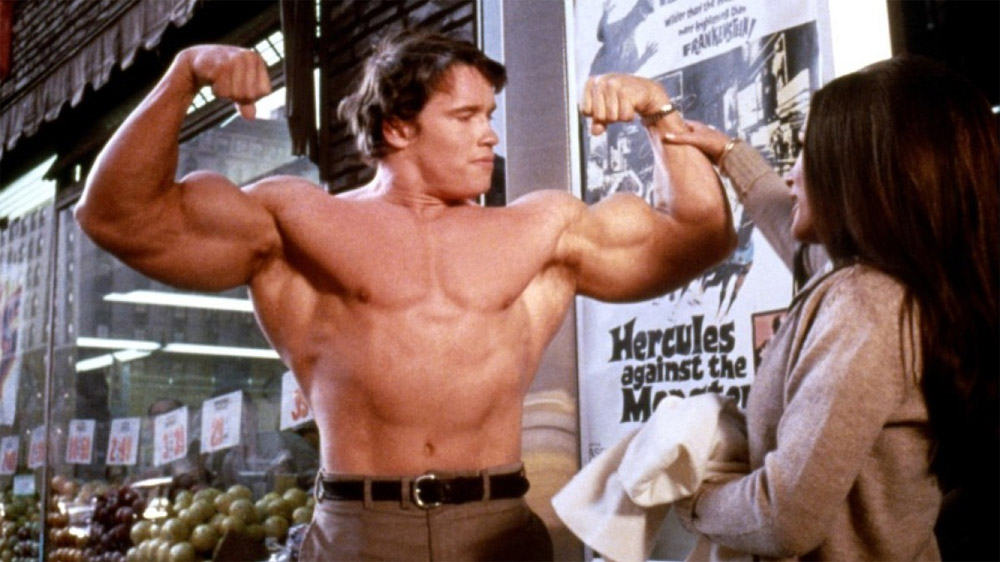
Hearing your recorded voice is one of the most awkward things there is. It always sounds so much different from what you expect from your own voice. It gets even worse if you hear it in an other language than your mother's tongue, and far more worse if you know that your fellow students will listen to it. Probably over and over again. And that they will point and laugh at you for sounding like Arnold Schwarzenegger (you have to watch this video). Well, the last bit might be a bit exaggerated, but this is basically what I felt after having heard my recording from when we were presenting and reviewing online dictionaries.

There was not much time to rehearse or write down what we were going to say. And naturally, we were all very nervous. To make things worse, I could not stop thinking about these infomercials on television with their over-excitement and over-fascination for their products. And then I could not stop pretending to be one of them. This is a transcript of what I said:
Hello everyone! We want to introduce you to OneLook, the Dictionary Search! Okay, at first it really looks scary and very ... white. And this is why we do something very important in the beginning: we change the background color! So let's change it to pink. Now it looks much more friendlier, doesn't it?

Okay, so we have several ways to look up a word. For example, you can just put in the word, or you can put in the end or the beginning of the word. Or maybe, when you are just solving a crossword puzzle, you can type in the first and the last letters and it will provide you with a solution. But we will just stick to the basics and type in 'bird'. Okay, Christine, what is this all about?

Okay, but what about the following situation: I have a definition or I want a synonym for something ... Christine, eh, sorry, Suzanna: do you have a solution for this problem?

So that's really great, but in conclusion: what are the several positive things about OneSear-- eh, OneLook.com?

Okay, and the negative aspects? Maja, do you know any negative aspects?

So, all in all, we can say: take one look at OneLook!
I have to admit that talking like that made things a bit easier and more fun, but it made me concentrate less on my speaking. With my grammar and my choice of my words, I am quite satisfied though. It was not overly impressive, but I think I used a nice variety of sentence structures and talked quite fluently. There is definitely room for improvement, but after the first shock of hearing my voice talking English, my grammar and word choice were one of the more pleasant parts of this kind of experiment.

Less pleasant was my pronunciation. There were a few words that I pronounced horribly and in a very German way, like "dictionary" or "aspects". I now fear that I might be always talking like that and that it was not just out of nervousness. Prior to hearing myself, I had actually thought that my pronunciation had improved a while ago. Having now being proved the opposite, I will definitely record my English-speaking voice more often and work on getting rid of the vibe of a Hercules in New York (no, really, you have to see this video) in my pronunciation.

Thursday, October 17, 2013

"I cannot knot!"


While we were talking about pronunciation and the silent "k" in certain words today, I couldn't stop thinking about this scene from one of the Winnie the Pooh movies. I actually never really watched or read the Winnie the Pooh series or films or books, but I often heard that there are always brilliant puns in them. This is one of them, dealing with the words "not" and "knot".

Friday, October 11, 2013

How Spaghetti Westerns turned me into a Movie Addict


I never was a big fan of watching movies. I knew that fantastic stories would be told by them, but I never had the patience to sit through a whole movie without thinking "why am I staring at a screen without doing anything?" at one point. It's not like I didn't like storytelling at all - I love going to the theater and getting sucked into a certain atmosphere. Unfortunately, a film never had managed to do this before. But then I started forcing myself to watch the big classics during the summer and I finally came to realize that it was not my lack of patience - I was just watching the wrong kind of movies all the time.

In yesterday's class, when we were introducing ourselves to our fellow students, I had mentioned the biggest trigger to my sudden love for movies: spaghetti westerns. Basically, these are westerns by Italian directors, most famously by Sergio Leone who is actually the iconic director in that department. There are quite a few differences between American and Italian westerns, most importantly in the way of storytelling. There is a very nice interview with the the iconic actor of the spaghetti westerns Clint Eastwood, in which the basic differences are explained briefly. (And Clint Eastwood mocking John Wayne's - the American icon of westerns - way of speaking is priceless!)


The first western I watched was the first part of the most famous trilogy in the world of spaghetti westerns: A Fistful of Dollars (1964). In my opinion, it is not the best part of the "Man with no Name"-trilogy, but as an entrance to the world of spaghetti westerns, it caused me to have a culture shock: The looks were different from anything else I had ever seen before in a movie. There is a perfect harmony between the landscapes and the interactions of the actors. Every scene seems to be a perfectly composed painting. Everything was done in a very minimalist way, like the dialogues were kept very short and the expressions (or the lack of expressions) of the characters told so much more than words could have. All these things made the storytelling straightforward and clear in a very unique way. This added a beautiful kind of tension to the climax and also the rest of the film. There was nothing too much or too less of.

But a Fistful of Dollars was only a mild introduction in comparison of what was about to come: the following two parts of the trilogy, namely For a Few Dollars More (1965) and The Good, The Bad and The Ugly (1966), were even more mind-blowing. They were also composed perfectly, but you could also really see that they had learned from their experiences. Also, the soundtrack by the musical genius Ennio Morricone finally caught more attention, and became part of the director's way of composing a picture of every scene. For example, here is the scene before the climax (which is, by the way, even more dramatic) of The Good, The Bad and The Ugly, which is still to this day considered one of the best movie scenes and music ever made.


In my opinion, it is safe to say that no other westerns - nor Italian nor American nor Spanish or whatever ones - ever reached the quality of the "Man with no Name"-Trilogy. Certainly, there still were some good ones, like Two Mules for Sister Sara or The Big Gundown, but, in my opinion, it never managed to establish the atmosphere the trilogy has. Surprisingly, also the newer westerns from nowadays could copy it. It seems it not about to the new technical equipment, but the establishment of a certain atmosphere. It just isn't the same. And this results in me watching these three movies over and over again, and never getting tired of it.

Spaghetti westerns not only waked my interest in watching movies, but also on how films are composed and what emotions can be triggered by the way a scene is built. I hope that I keep my motivation up to look deeper into the science of movies. The following might sound cheesy, but I am incredibly happy that westerns came into my life. And thus, it is proven that I was not joking when I told you all that I was obsessed with westerns. It is truly deep love.

Thursday, October 3, 2013

Restart!

(illustration: Ericka Lugo)

Hello everyone! I guess this is a "Welcome Back!" from the summer holidays and a fresh start into a new semester. Are you motivated? I am motivated! For how long? I don't know! Maybe it's also just the coffee talking!

Over the long but beautiful summer, I had enough time to actually comprehend that I had not passed the first year of university. Naturally, it made me sad at the beginning but now I am almost enthusiastic about starting over again with the experiences I made last year in mind. Everything is less frightening without the worries of being a first-time-student, and being already used to the mess university is sometimes makes everything much easier.

During our first English lesson today, I tried to remember what my expectations for university were last year. I remember that I thought that English would be a piece of cake, because I always had good grades in school and never had to study. Now I feel embarrassed for telling Fiona once in one of our first lessons last year that I would be able to study vocabulary by just looking in which context they were used in a sentence. I also remember feeling quite self-confident for having written my first homework in a few minutes on a, in my opinion, quite a high level. And also how that self-confidence dropped significantly when I got the corrected version back. I also had to think about having started studying for the first exam only a few days before it took place, and how desperate I got the more time passed. And how disappointed and disillusioned I was when I got a barely positive grade for it. So basically, I went from being on a high horse to hoping for a passing grade.

I think the most important thing you get to know in university is your individual way of studying efficiently and the courage to try out different ways of doing it. There is no general recipe for anybody and there's rarely one ultimate solution. For example, how to study new vocabulary is still quite a mystery to me. However, writing summaries of lectures in my own words proved to be the best way of dealing with lots of information. I also had to realize that over all the ways to study, time is the most important factor. And that procrastination gets even worse the less time you have on your hands. I think that learning how to keep information in your head in the long term is crucial for passing university. It seems quite obvious, but that studying is not just about keeping busy with the subjects in any way was quite an enlightenment.

Maybe I am not in the right position to provide wisdom to first-time-students because it is not that long ago that I was one myself. But these are a few things I wish people had told me a year before. Well, maybe people did tell me but I didn't understand. But now having that in mind, it should become a good semester for me. For now, I am looking forward to it.

Sunday, June 23, 2013

Culture Days: America and Ireland

source: society6
Last week must have been quite exciting for most of us students. Not only was it ridiculously hot, this week was also filled with final exams and sudden attacks of unexpected studying. But the past week was also spent with preparations for our Culture Days, which would be a two-days event filled with English students happily talking about aspects of their teacher's culture. In our case, we had a really nice mixture of Irish and American culture presentations.

I was really nervous before I had my own presentation about Bobby Sands. Normally, I'm not scared of talking in front of an audience, but I hadn't held such a presentation for a long time. I didn't even had the heart to go to the first bunch of presentations on Wednesday afternoon, because I felt like I wasn't prepared enough. In the end, I was rehearsing my presentation in front of my cats for about two hours straight, in which process my voice almost went missing. Luckily, when I arrived at university to hold my presentation, I was still in rehearse-mode and so I could go fluently through my text without spending too much thoughts on how nervous I was.

After my presentation was done, I finally could let go and watch these of my fellow students. Unfortunately, I couldn't watch as many as I wanted because I had two exams the two following days, but I at least managed to watch a few more than required. These were:

Ireland: From Emigration to Immigration by Alexa L.
Abortion Law in Ireland by Andrina D.
Video Games in Ireland by Artur S.
The Irish Film Industry by Dunja D.
Hill of Tara by Nadine D.
This is Friz! by Sandra L.
Languages of Irish Travelers by Kristina T.
Poetry in Irish Schools by Cornelia K.
The Influence of James II on the Irish by Julia B.
The Integration of Islam in Ireland by Alexander H.
Witchcraft in Ireland by Sabrina K.
Comics Books and Superheroes by Lucie B.
Amelia Earhart and Bessie Coleman by Orsolya C.
Hurricane Preparedness by Claudia S.

For our final oral exam we have to pick five of these topics. The ones I chose are the following:

Video Games in Ireland (by Artur S.)
I knew I would pick this topic for my oral exam as soon as I saw the title because I like playing video games. However, my knowledge about the history of videos games is only based on the "big ones" (America and Japan) and so I was most surprised to hear that Ireland's contributions aren't that unimportant in this industry.

The Irish Film Industry (by Dunja D.)
I really liked Dunja's presentation about the Irish film industry because she managed to give us a brief overview without attacking us with too many year numbers and hundred of names. She really waked my interest.

This is Friz! (by Sandra L.)
I simply had not heard of Fritz before, and I really want to talk about art.

Poetry in Irish Schools (by Cornelia K.)
Cornelia's presentation was my most favorite. She provided perfect examples and explained everything in a very calm and direct matter. It also made me think about how Austria's schools deal with poetry at a young age.

Witchcraft in Ireland (by Sabrina K.)
I like the mysterious vibe that comes from this topic. I'm happy that Sabrina chose to focus on two particular examples rather than explaining witchcraft from a dry historical view.

I think our Culture Days were very exciting and great. It was just too bad that it took place in a week full of exams. This took our chance of relaxing and just watching the presentations. However, I really hope that we will do something like that soon again or that at least the next SUK2-class will organize it as well. The whole event was the perfect opportunity to get to know these countries' culture better.

Friday, June 14, 2013

50 Years ago, the First Woman Went to Space


Yesterday morning, when my radio alarm went off, the first words I heard were "today is the 50th anniversary of the first woman ever being in space". I was still quite sleepy and impressed at the same time, when I realized that they were referring to the soviet cosmonaut I'm having a presentation about next week in Russian class. Her name is Valentina Vladimirovna Tereshkova and -- you might have guessed it already -- she was the first (official) woman ever being in space.

It was the period of the space race in which America and the Soviet Union competed about the most developed space program, which resulted in the most ridiculous and dangerous experiments. Almost everybody knows about, for example, the Russian dog Laika that was sent to space but never came back. There were a huge amount of failed experiments on both sides which would be made public only several years later. After all, neither America nor Russia would have admitted mistakes or failure.

Interestingly, Tereshkova was not a "real" cosmonaut. She was working in a textile factory and parachuted for in her free time. When main space engineer Sergej Koroljov formed plans on sending a woman into space -- after the soviet cosmonaut Yuri Gagarin successfully became the first man being and returning from space -- Tereshkova was chosen over 500 female candidates for her knowledge about parachuting and for deriving from a proletarian heritage. She underwent intensive cosmonaut training, including weightless flights, rocket theory, spacecraft engineering and many more.

On 13th June 1963, Vostok 6 launched into space. She orbited the earth 48 times and stayed in space for almost 3 days, which was the longest stay in outer space at that time. Unfortunately, she experienced nausea for most of the flight, which main engineer Koroljov was not pleased about. It is said that this was the reason why her flight was not made public immediately. Furthermore, it took further 19 years until the next woman would be send to space.

Today, Tereshkova is 76 years old. When she was invited by Vladimir Putin for her 70th birthday, she stated that she would love to go to Mars, even if it would mean to never come back to earth. This among several other reasons is why I think she must be an incredible person. Her life story is very impressive and she seems to be a strong woman which we never can have too few of.

Thursday, June 6, 2013

Movie: Hunger (2008)


Sometimes, when I want to get into a certain topic that I am interested in (or at least should be for university), I like to start getting into it by watching a documentary or video adaption about/of the topic. This is also what I did when I had started researching about the Irishman Bobby Sands for my culture essay for English class. I felt that the political issues that surrounded his actions were a bit hard to understand. So I hoped that I would get the grasp of a basic image about these when I would be watching a movie or documentary about it.

The most recent and popular adaption of Bobby Sands' hunger strike in 1981 is the movie "Hunger" (2008), directed by Steve McQueen. It describes the hunger strikes in an unpolitical way, showing pain and fear on both sides (in this case: by both the guards and the hunger strikers) equally with using only a few words throughout the whole movie. McQueen rather focuses on delivering the right atmosphere by using strong images. A good example for such are the scenes in which fully-armed guards and naked prisoners fight each other brutally, both trying to gain control over the other. In contrast, a dialogue of 20 minutes between Bobby Sands (portrayed by Michael Fassbender) and a priest is shown in the middle of the movie, which, by the way, was filmed in one single take without changing the perspective of the camera. It is the exact opposite of the first third of the movie and mostly consists of skirmish between these two. The last third of the movie is showing the process of Sands' turning more and more into skin and bones, by using again strong and depressing images, this time ones of a broken man. The movie ends with Sands' death, not showing the aftermath and political consequences.


In my opinion, "Hunger" is not only the best adaption of the Irish hunger strikes, it is also an outstanding movie in general. The movie does not go for the heartstrings, but sticks to simply showing strong and disturbing images. Every further spoken word would be one too much, because the uncommented pictures speak for themselves. Even the dialogue between Sands and the priest requires to look at the picture itself and not focusing what they actually say, rather focusing on what they do not say. Creating an atmosphere and emotions in this quite theatrical way is what really astonished and touched me about this movie. It might not have cleared the fog about the political background in my head, but it left me incredibly impressed.

Wednesday, June 5, 2013

Learning Languages Online - Busuu


We all know that learning a new language is not as easy as it seems. Studying a language at university might be one of the most effective ways to do that, however, there are of course many more ways to accomplish that. People want to learn languages faster, easier and without much effort. For those, books like "Learn Russian in 30 Days!" or "Becoming the Master of the Spanish Language in less than 14 Days!" are written and published, although most of these look more promising than they are in reality.

And then there is Buusu. I heard about it in a commercial on television and they instantly got my curiosity. Basically, it's a community connects native speakers with language learners. People can share their texts or audio recordings and get these corrected by native speakers.

I have tested it for about a week with Russian as my learning target as an additional exercise to university. As soon as I had signed up, I had access to several lessons relating to basic topics such as family or emotions. For each lesson, I could choose between watching a slide-show of pictures with topic-related vocabulary on them, reading and writing dialogues and -- most exciting -- chatting with native speakers.

Unfortunately, it is the most basic thing about this community that had disappointed me: their lessons, which are supposed to take you step by step to a higher language level, are translated by and therefore dependent on the online dictionary PONS. Their dependence on PONS is one of the major reasons why their computer-generated lessons are hardly helpful, because the vocabulary is often taken out of context, often providing a wrong translation.

I decided to take the opportunity to interact with native speakers instead. When I had shared a little introduction text with my Russian knowledge from university, I almost instantly got several suggestions and corrections on my text which were incredibly helpful. In the end, I had even found a tandem-partner who wants to study German while being a Russian native-speaker.

All in all, Busuu might not be the place to learn a new language starting by zero, but definitely the right place to find language-interested people from around the world who are very happy to help you on your way of learning their native language.

Monday, April 22, 2013

Tasty Search Engines and Asparagus


I can't remember how I stumbled upon Yummly.com. But what I know is that it was a good thing, because it makes life in the kitchen so much easier. Why, you ask? Because this page is a search engine dedicated to food. You type in one random ingredient and it delights you with the most delicious recipes from other pages around the world. As soon as you've typed in your ingredient, you can limit the results by choosing further ingredients or ingredients that should be avoided, choose which holiday the recipe should suit, which taste it should have (e.g. salty or spicy), which allergies you have or which diet you stick to, which techniques should be used (e.g. stir-fried or baked), which cuisine it derives from and even more.

I tested it a while ago when I had bought a bunch of asparagus. I had never prepared asparagus before, so I was pleased when I found this recipe for oven-roasted asparagus. It is really simple as it mostly consists of washing, cutting and putting the asparagus into the oven, however, the result was a very tasty snack. And, furthermore, I learned some new vocabulary from this recipe:

to lop off (to chop/cut off)
to pat something dry (to hit lightly -- e.g. with a cloth -- until it's dry)
to drizzle, e.g. with oil (to moisten)
Don't skimp! (Don't use too less!)

I am very happy that there is a search engine for recipes, because I usually tend to buy food without thinking of how to prepare them afterwards. So this is definitely a good way to avoid throwing away food because it gets bad before you think of what to do with it and it most certainly helps finding new recipes and techniques.

Thursday, April 4, 2013

Movie: Soldaat van Oranje


Yesterday night I chose to watch a DVD that has been hiding unwatched in my shelf for far too long: Soldaat van Oranje (engl.: Soldier of Orange) - a Dutch film from 1977. It portraits the life of six Dutch college students and the paths they follow during the Nazi occupation of Holland during WWII. The film is based on the autobiography of Dutch war hero Erik Hazelhoff Roelfzema (portrayed by Rutger Hauer). It is, until today, one of the most successful and known Dutch movies. Although it is set in the dark times of the World War and follows a serious storyline, it is mostly not gloomy or depressing - sometimes, the movie even makes you laugh.


On a more linguistic side, it was also interesting to follow the switches between languages. Obviously, most of the time they spoke Dutch, but also German when talking to Nazis and English when they cooperated with the British government. 

Nonetheless, I enjoyed watching Soldaat van Oranje, especially because they managed to lighten up such a serious topic in a very charming way.

Wednesday, April 3, 2013

Movie: Pontypool - Radio Zombie


Last week, I was just casually browsing the web and listening to the radio. However, when I switched the channel, I wasn't greeted by friendly radio hosts nor was I pleased with music: people on the radio were panicking about other people repeating single words over and over again, and how infectious this behavior was. Luckily, I was able to tell: this is not live radio, this must be a radio drama!

And I was right. In fact, FM4 broadcasted the radio drama version of the movie Pontypool, which is not your usual zombie flick. I personally think that Pontypool has a very philosophical and theatrical plot. To put it briefly -- beware of reading further if you want to watch or hear it!: it's about a virus that is spread through the English language. Various words are infected, which are repeated endlessly by the victims without having themselves under control. In the end, they feel forced to eat everything that produces English words: other human-beings as well as radios.

In the movie and in the radio play, we get to know of that event in a radio station, which is the main setting of the movie. During their broadcast, they get strange calls from their correspondent outside the studio, describing infected people and how he fears for his life. At one point it seems that the host and a radio technician are the last sane survivors in this town, when they realize how to save oneself from the infection: people just have to stop actually understanding these words.


The fact itself that a language or rather words are infected and that you have to alienate their meaning is just mind-blowing. I think that's such an intelligent thought and nothing you would expect in a horror movie.

The plot of Pontypool is only partly based on the book "Pontypool Changes Everything". As far as I've read in the book reviews, the virus itself is already present in the book and the radio host is only a minor character. Basically, the movie only borrows the idea of the virus itself, while the book deals with the results. I haven't read it yet, but it is definitely on my list. I'm very curious how the virus is described and if I can expect full pages with one repeated word.

If you want to listen to the radio drama yourself, you can do it on the BBC website right here. Strangely, although the drama consists of the audio of the movie itself, they have different endings. However, I still can't decide whether I prefer the movie over the radio drama or not. I'm just fascinated by the idea itself, in case you haven't noticed it yet.

Tuesday, March 19, 2013

Food Blog: have cake, will travel

source: keenhaven.com
Vegan recipes that don't require expensive (artificial) alternatives for animal products are often hard to find. And also vegan cookbooks that aren't trying too hard by thinking of the most exotic recipes are rare as well. Fortunately, I found the perfect vegan cookbook a few years ago: The Complete Guideline to Vegan Food Substitutions by Celine Steen and Joni Marie Newman. It's a cookbook that not only offers simple recipes, such as like vegan pancakes or vegan feta cheese, but also guides on how to "veganize" traditional recipes. They provide a huge list of alternatives for certain animal products, such as milk, cheese or eggs, at the beginning of each chapter.

Although this book really simplifies vegan cooking, I still like to read food blogs to find new ideas. I usually stick to German-speaking food blogs (mostly because of the measurements), but when we were asked to write about an English-speaking food blog, I thought of looking up what the authors of my favorite cookbook are doing. And it wasn't surprising at all that they had their own food blogs as well.

I instantly fell in love with Celine Steel's blog "have cake, will travel". I have to admit that this is mostly to her breath-taking photographs, as everything in her photos looks so natural and like it's straight out of grandmother's kitchen. But as soon as I took my eyes off her photos (which is very hard, because they take all the attention away from the text), I recognized her witty writing style from the book. In her posts, she usually starts with a personal story about the ingredients or how she craved for something special. This is followed my mouth-watering pictures of the recipe's target and the recipe itself. Unfortunately, her blog (in difference to their book) offers more food for people with a sweet tooth like muffins, tarts, cookies, syrup, and so on, which actually isn't quite my cup of tea.

Monday, March 18, 2013

Soylent, or: The Man Who Stopped Eating Food

picture source: John Suder
I know the header picture is misleading: I won't post about the movie Soylent Green (maybe another time), but rather about something that has a very similar name: Soylent. It's a "thick, odorless, beige liquid" which has the potential of stopping world hunger, saving the environment and turning humanity into healthy living-beings.

But let's start from the beginning: Rob Rhinehart (his blog: robrhinehart.com), an engineer from the U.S., counted up how much time, money and nerves buying and preparing food costs. The shocking result led him to the following question: is it really food we need to function and survive or the elements and chemicals in them? Is it, for example, the bread as a whole or the carbs in it? So he started an experiment: he would mix only the elements and chemicals itself and create a nutritious liquid, called "Soylent", which contains the perfect diet to gain all the energy, vitamins and everything else we need. And: he would not eat any other food for a minimum of 30 days.

He states on his blog:
I feel like the six million dollar man. My physique has noticeably improved, my skin is clearer, my teeth whiter, my hair thicker and my dandruff gone. My resting heart rate is lower, I haven't felt the least bit sickly, rare for me this time of year. I've had a common skin condition called Keratosis Pilaris since birth. That was gone by day 9. I used to run less than a mile at the gym, now I can run 7. I have more energy than I know what to do with. On day 4 I caught myself balancing on the curb and jumping on and off the sidewalk when crossing the street like I used to do when I was a kid. People gave me strange looks but I just smiled back. Even my scars look better.

He also explains how his mental performance improved, and how much money he saved while his diet consisted solely of Soylent (according to his blog, the average American spends $604/month for food while Soylent costs $154.82/month). If more people switched to the Soylent diet, we would not have to produce that huge amount of food on fields and in factories anymore. Also, people in the Third World Countries would benefit by having a perfectly nutritious meal without big effort (although clear water is essential for the preparation of Soylent).

It surely sounds like science-fiction: an odorless and low-cost liquid you drink a few times a day and you are perfectly healthy and energetic. I'm just wondering if humanity would really give up the joy  and culture of eating when Soylent was established around the world (although Rhinehart stated that it can be combined with traditional food as well, but he doesn't crave it anymore). I personally like almost everything that helps deprived people and the environment. If it was available in stores I would most likely try it out.

However, I think preparing and eating food is deeply rooted in our culture(s) since hundred and thousands of years, so even if it is beneficial in many ways -- I don't think that it can replace food as a whole.

Sources:
http://robrhinehart.com/?p=298
http://www.vice.com/read/rob-rhinehart-no-longer-requires-food

Sunday, March 10, 2013

Why I'm not a good Blogger

source: ler0c
I was doing a bit of brain-storming for our first homework of this semester today, you know, how we plan to improve our blogs and what we like best about the blogs of our fellow students. All I could think of during gathering my thoughts was: why is it so hard for me to post regularly? How did the other students manage to post so much, while I was struggling with it all the time?

Blogging is not even new to me. I have always been writing about my private life, starting in 2004/2005 with shamelessly spamming my blog with writing ridiculously detailed posts about my everyday life (which mostly consisted of going to school back then). Obviously, I wasn't the only one doing this -- I knew lots of people on the internet who did the very same, although it wasn't that "mainstream" during that time. It was kind of a scene you belonged to when you managed to let your readers believe that your life is always full of adventures and fun. It made me feel good to present the kind of impressive parts of my life, because most of my readers didn't know me personally. This made it easier to act like a super heroine since they couldn't prove the opposite.

When social platforms like MySpace and Facebook came along, presenting your life on the internet became much more common, and slowly but surely also privacy on the internet became a topic. It was (luckily) the end of my glorious time of thinking "Notice me, internet! I'm interesting!". I started becoming more careful with my privacy, thinking twice whether my posts are worth being posted or not.

However, there was also the other direction: out of a sudden, a lot of people started blogging about their everyday life as well and/or posted their opinions about certain topics with sheer passion, while I more and more hesitated posting on my blog. I just felt that my everyday life was not interesting enough. I felt and still feel that blogging was yet again a way of showing off. My personal impression is that lots of bloggers think of themselves as being extraordinary, and that their metaphorical voice on the internet is loud and of big importance. On the internet, I am one person amongst millions and so in most cases, hardly anybody will be interested in what I ate today or why I don't like ridiculous high temperatures in summer.

In the end, I might be on the way of finding an answer to my question at the beginning: either I'm not self-confident enough to write down my personal opinions or I take blogging far too seriously. Either way, I have to find a better solution to be able to post on this blog more regularly than not posting at all -- at least for the sake of a good grade.

Monday, January 7, 2013

What is a hillbilly?


I think I have mentioned quite a few times that I really like watching TV shows. One of my current favorites is "Whose Line Is It Anyway?" from the 90s.:

There are four actors who play out different improv games, which contents are based on suggestions from the audience or from the producers of the show. The actors work notably well together and think of the most hilarious things off the top of their heads. In some games they have to fulfill character suggestions, which are often stereotypes. One is quite often suggested: the stereotype of a hillbilly. Wikipedia defines a hillbilly the following:
Hillbilly is a term for people who dwell in rural, mountainous areas of the United States, primarily southern Appalachia but also the Ozarks. Owing to its strongly stereotypical connotations, the term can be offensive to those Americans of Appalachian heritage.

Here's a good example of how the "Whose Line" cast likes to interpret the hillbillies:


The reason I'm posing is that while I was reading about Appalachia for the next Progress Check, the actors of the show doing their hillbilly parodies kept popping into my head. They do exaggerate a lot, but like we also mentioned in class: stereotypes do help to get a slight image of what it's really like there. And now I finally know who the cast of "Whose Line" are trying to show.