Tuesday, December 30, 2014

Pronunciation Diary: Learning from Cowboys and Sitcom Characters

We all know that there are many varieties and accents in every language. Well, there are also neutral "accents" which often serve as a basis for language learners. But once you have mastered them, why not go for specific accents? The thought of speaking various English accents sounds really awesome to me. After all, my parents always wanted me to talk Standard German, which is why I am really bad at pulling off Austrian accents -- even if I try really hard.

So, besides accents I think sound charming while listening, I looked for accents I would like to speak myself. Generally, I prefer American English, maybe because I am listening to it a lot. For example, I recently noticed that I really like the way George Costanza in the 90s sitcom 'Seinfeld' talks.


I really like the way he is saying "coffee". It sounds like there is a /w/ between the /k/ and /o/, which really makes a huge difference. And when he is saying "clock", he seems to pronounce the /kl/ sound further in the throat. I like how clearly he voices voiced sounds, and also his intonation is very interesting. According to the internet, the actor Jason Alexander is from New Jersey, therefore speaking the New Jersey accent. So, this accent is definitely on my list for further research.

Another actor I love listening to is Clint Eastwood when he was young. His reputation actually is to not speak very clearly as he tends to talk through clenched teeth. Not so much in this one though:


I noticed that he tends to stretch voiced sounds, which somehow sounds really beautiful in a linguistic kind of way. He also pronounces the /h/ in /wh/-words, like in "which" or "white" towards the end of this video. As for intonation, he rarely raises his voice (as opposed to George Costanza above), and speaks in a slow and regular rhythm.

I tried to find out which accent he specifically speaks. People on the internet say it's Standard American English, so nothing specific I could research further for. However, I think he doesn't speak entirely Standard American, as he stresses certain sounds a bit more than other people would.

Actually, I think trying to talk like a bit young Clint Eastwood (without clenched teeth), as far as this is possible with a different voice and being a woman, sounds like a good plan. 

Mastering Vocabulary Learning: Inspired by Others


In my previous post about vocabulary learning I tried to explain my own strategy of how I study vocabulary. I am still convinced that this is the most efficient way for me, as I can be really flexible using my flashcard app on the phone when I am on the bus or tram (and staring on my phone anyway), or when I am using my laptop (which is the case most of the time). The only thing I really need to change about this: be more consistent and go through my vocabulary decks more regularly. The more often I go through my word decks, the shorter and less painful my revising sessions will be will be.

However, I was looking through other strategies on the blogs of some fellow students to find further ways to improve my strategy. One thing I definitely want to include in my daily routines is what Nina mentioned in her post. She reads through interesting newspaper articles, collects interesting phrases and words from them and adds them to her personal glossary. Actually, it is less the fact that she collects these things from articles than that she has a personal glossary. 

I sometimes also write down phrases I come across and find interesting, but never try to study them in fear of occupying too much brain capacity I'd need for my studies for university. But after reading Nina's post, I felt encouraged to actually do study them. After all, there is a reason I find them interesting, so why not include them in my active vocabulary? My English skills should not solely depend on what I learn at university. However, most phrases I've collected so far are from movies or fiction literature, therefore more colloquial. That's why I will now try to include words from more sophisticated sources, such as newspapers or other articles.

In short, what I try to improve is: learn to be more disciplined and go through my vocabulary more often, and don't shy away from collecting and studying words that are not asked in exams. These sound like really nice resolutions for 2015.

Monday, December 29, 2014

Pronunciation Diary: Workout for your Tongue Muscles!

 (picture source: Matteo Maggiore)


You know, not too long ago, I thought my English pronunciation was quite alright. Almost good even. I was pronouncing voiced and unvoiced /th/-sounds correctly, and most of the time, I distinguished the /w/-sound and /v/-sound. So when I signed up for a pronunciation course at the Department of English Studies last summer semester, I thought it would be a piece of cake. Gaining ECTS-points the easiest way ever. Boy, was I wrong.

Quite at the beginning, we had to read out difficult texts in front of our teacher, who would then analyze our pronunciation mistakes. According to the teacher's feedback, the thing I most struggled with was voicing certain sounds. When I said "in the", my /th/ always became a barely voiced /d/, and basically all my /d/s at the end of words became /t/s. Surprisingly, even after knowing my weaknesses, I still could not pronounce these sounds correctly. Well, I could produce them individually, but not while speaking. It just didn't come out naturally. It felt like I needed to re-arrange my tongue between sounds in order to produce them, which resulted in awkward pauses between words or syllables. At this point I realized: theory only wouldn't get me anywhere. I needed to train my tongue like a muscle. It had to get used to new movements and positions.

During the pronunciation lessons, we repeated word pairs and dialogues we heard through headphones, while a computer program recorded our own voices individually. The program would then automatically repeat our recorded voices, therefore give us immediate feedback at how well we produced the sounds. This was immensely helpful, as I often concentrated on producing the sounds without paying attention to how they actually came out. However, the real work had to be done at home: by reading out (!) dialogues and word pairs, you really physically train your tongue and get used to producing the sounds in the way you should. In the end, it really paid off: I got a B on the oral exam, and I felt that my pronunciation had really greatly improved.

However, during the summer, I didn't practice talking English loudly that much anymore. When I talked English again, I was shocked at how worse my pronunciation had become after such a short period of time. I still know the theory of when to produce which sounds, but my physical ability to produce the sounds correctly the moment I needed to sadly worsened. So now I am back to reading texts out loud again and recording myself while doing it. Hopefully, I will soon be again on at least the same level I had reached before the summer break.

My impression is: mastering pronunciation is not like learning how to ride a bike. You have to consistently practice it, or you soon get out of practice.

Revisited Summary: The Crisis of Credit Visualized


The video "The Crisis of Credit Visualized" is a really helpful guide through the land of businessmen sitting on bags full of money. Unfortunately, or perhaps luckily, I know hardly anything about this world. It seems to be full of numbers and bad, bad, really bad people, so I don't want to be part of this world. But the more I learn about it in English class, the more I feel that I, or generally people not interested in this, people outside of this world, really should know more about it.

Well, but the real thing is: we had to write a summary about this video as a homework. My words above still remain true, but with almost no background information, I really had a hard time grasping the concept of this topic. However, as it turned out, that wasn't the problem when I summarized this video. The problem was that I forgot about the word count of 200, and therefore produced a summary of more than 300 words.

Version 1:

The video „The Crisis of Credit Visualized“, written and directed by Jonathan Jarvis, is designed to explain the Credit Crisis in a simple way. 


After 9/11 and the dot.com crisis, the U.S. Federal Reserve dropped interest for treasury bills to 1% to make lending money more attractive, consequently strengthening the economy. This low interest not only attracted consumers, but also bankers who could now lend money easily without losing much profit during deals. This led to a system called leverage: lending high amounts of money, make high profits and pay back loans easily.

The leverage system was also applied on the estate business. A mortgage broker would connect potential house owners to a lender who gives them a mortgage to fund the house. Because of constantly rising house prices, an investment banker sees a potential deal in this and buys numerous mortgages from the lender. This establishes a monthly flow of money, which is cut down into three parts: safe, okay and risky. This separation is called Collateralized Debt Obligation (CDO). If one homeowner defaults, the money flow gets weaker, which stops the risky part to be filled. However, as long as there are enough homeowners, the safe income will still be filled, which is why it is attractive to investors. This results in more CDOs and more investors willing to buy CDOs.

If homeowners default on their mortgage, the lender receives the house ownership. As the value is covered by the default, lenders can add risk and lend sub-prime mortgages to less responsible homeowners. However, this leads to more homeowners defaulting as they cannot afford their houses, which in the long turn makes house prices plumbing. Consequently, money stops flowing through the CDOs as there are more houses than mortgages. The system freezes, as no party invests into the other anymore and investors are not able to pay back there high amounts of loans and go bankrupt.


Version 2, the shortened one:

The video “The Crisis of Credit Visualized” by Jonathan Jarvis simply explains the Credit Crisis in 2002.


After 9/11 and the dot.com crisis, the U.S. Federal Reserve dropped interest for treasury bills to 1%, which attracted bankers who could now lend money easily without losing much profit during deals. This led to a system called leverage: lending high amounts of money, make high profits and pay back loans easily.

The leverage system was also applied to the estate business. Mortgage brokers connected potential house owners to mortgage lenders. Because of constantly rising house prices, investment bankers bought numerous mortgages from the lenders to establish a monthly flow of money. If one homeowner defaults, the money flow gets weaker. However, as long as there are enough homeowners, the safe income is still established, which is why it is attractive to investors.

As the value of a house is covered when the homeowners default, lenders can lend sub-prime mortgages to less responsible homeowners. This leads to more defaults, which in the long turn makes house prices plumbing. Consequently, investors stop receiving money as there are more houses than mortgages. The system freezes and investors go bankrupt.


To be honest, I think the shorter version is missing some details (that were mentioned in the first version) that would be essential to understand the concept with no background information. However, with background information in mind, I think it can help get the overall image of this topic.

Tuesday, December 2, 2014

Mastering Vocabulary Learning: Routines

Before I started university, I had no system for learning vocabulary efficiently. I would usually just write down a list of words and their translation, and hope for the best to magically memorize them. This lack of a system soon turned out to be insufficient for my studies, and so I tried out several techniques to find one that helped me. Not too long ago, I finally found a method that works well for me: digital flashcards.


Prior to making flashcards, I analyze the words I need to study thoroughly: I look up explanations, synonyms, common collocations and, most importantly, example sentences. My favorite tools include Vocabulary.com and the Merriam Webster Online Dictionary, and for further collocations, I have recently started using COCA. Unfortunately, collecting all this information is very time-consuming, which is definitely a drawback. However, in the long term, I benefit from it immensely, as I really get to know the contexts the words are likely to appear in and therefore get a feeling for how to use them properly.

Based on this analysis, I put together digital flashcards in a computer program called anki. It works just like physical flashcards: you put one piece of information on one side of the card, and put its definition on its on the other side. I usually type in collocations or phrases, rather than a single word, on the front side, and use synonyms or English explanations for the flip side. For words I don’t know how to pronounce, I also insert audio files, most often taken from the online pronunciation guide Forvo.com. After having typed in my list of words and their explanations, I can start studying these cards right away.


There are several reasons why I prefer anki over other flashcard programs. Firstly, anki exists both as a computer program and as an app, and will synchronize changes and learning progress across the devices it is used on. It also lets you modify the way you review cards: you can either simply look at the answer after guessing it in your head, or force yourself to manually type in the answer and compare it to the original solution. However, what I like the most about anki is that after answering a question, you have to rate how well you actually knew the answer. Based on these ratings, the program will ask you cards you were not so sure about more often and cards you knew for sure less often. It generally restricts the number of cards you revise per session to a realistic amount, but also provides a “cram mode” for emergencies. I think all these features really make a difference as I feel I am learning more efficiently now than before I started using anki.

In my experience, what really counts when learning vocabulary is discipline. It’s the true key to success. It is crucial to start studying early enough and to do it regularly; otherwise, there is simply not enough time to get it into your long-term memory. Unfortunately, discipline is not something a computer program can provide me with, so this is one factor I still have to work on. However, if I keep my motivation up, I think I will get better in learning vocabulary, especially now that I finally have an efficient method of doing it.

Sunday, March 16, 2014

What Good Bloggers Do

About one year ago, I wrote a post about my rather unsuccessful blogger-career in my first semester as an SUK-student. Although I already had some blogging experience at that time, I was a bit overwhelmed by the task of writing a blog for a wider and more public audience. Luckily, things seem to have changed and I have become a more successful blogger in the meantime. I don't hesitate to share my opinion about something anymore and I realized how much fun it is to write about your own interests and to share your thoughts and knowledge about something.

Especially the sharing of knowledge is something I really grew fond of, because the process of writing about a topic I am enthusiastic about forces me me think of the best way to convey what you want to say in a clear matter, instead of writing "GUYS, THIS IS AWESOME!" in capslock. You have to organize your thoughts and make it easy to understand (and, naturally, also interesting) for people who don't know anything about that very topic. It is not about explaining the whole topic to the audience, but to explain what is interesting or cool about it and why you are interested in it. And maybe also why it could be interesting to the readers as well.

Naturally, not every topic somebody is excited about is automatically interesting to other people as well. But if you learn something new from a post about a topic you know not much about, then the blog (or rather the author) did everything right. That's also something I think most of the Top 10 Bloggers from the last semester did right: they managed to offer clear insights into topics that were interesting to them and mostly new to us. Some of them also used catchy post titles, funny pictures or a background story to catch the readers attention. But still: the post itself must be interesting to read as well.

What I also really liked about most of the top bloggers was that they stuck to one or two main topics in their blogs. Some wrote mostly about traveling, other focused on American history. That they were so consistent with that without becoming boring was something I was really impressed by. This way, you knew almost instantly what you can expect from their blogs and also if you might be interested in their future posts. I, on the other hand, posted about things that just came to my mind with no connection to the other topics I was talking about. Don't take me wrong: this can also work absolutely fine! But I decided that I also want to stick to one or two main topics so that people get a feeling about what I might be posting about in the future.

There are also two further things I want to change about my blogging behavior: firstly, I want to post more frequently and secondly, I want to read more blogs by others SUK-students and (okay, that makes it three things) leave more comments on their posts. This way, we might inspire each other to post about certain topics and consequently will also get motivated to post more as soon as we realize that people do read our blogs. Wouldn't that be great? I think it totally would.

Wednesday, March 12, 2014

B.A.R.F. or: How to Feed Your Cats (and Dogs) in the Most Natural Way!


Deep inside I am a crazy cat-lady. This does not necessarily mean that I have hundreds of cats, but the well-being of my two cats is very important to me. That's why I have been reading hundreds of articles about the ideal diet for cats in order to help them having a happy and long life. 

Well, to cut a long story short: industrial food for animals is said, to contrary believe, to be really really bad. It makes a whole lot of sense if we keep the reputation of industrial food for human-beings nowadays in mind -- artificial, full of additives and unhealthy -- just that the quality of animal food is far worse. The animal food industry uses similar tricks to deceive pet owners and even the pets themselves. For example, they use include flavor and color enhancers to make the food smell and look better, just as in human food.

Although cats are carnivores (pure meat-eaters), canned cat food often contain less meat than cats need (vegetable ingredients often substitutes as meat as it is cheaper) and contain meat that is considered inedible for human-beings. So what else is left to feed then? 

The solution to all cat-ladies' problems is called B.A.R.F: Biologically Appropriate Raw Food. It basically is about feeding cats (and dogs) raw meat. With industrial food, you can never be sure what's really inside. With B.A.R.F. though, you yourself prepare the meals for your pets on the basis of what your pets really needs. Luckily, there is a lot of literature and online guides for that which are based on what animals would eat in their natural habitat. Just take a look on the most common prey of a cat: birds. It consists of feathers, skin, flesh (the part with the muscles in them), organs and processed food inside the organs. Each part of this serves an important purpose in the cat's body: the feathers and the food inside the organs help with the digestion, the skin, flesh and organs contain the fat and vital vitamins. Therefore, crazy cat-ladies buy meat and organs at the deli counter or at the butcher, and, if necessary, mix them up with vegetables which serve as a substitute for the stomach contents. Some things such as minerals or certain vitamins are substituted with oils or powders. 

All of this might sound a bit odd. Maybe because many people think that putting that much thought into the diet of animals is way out of line, especially if these pet-owners don't live healthy themselves. I think the difference between humans being able to choose what to eat and pets being dependent on the choice of their owners is crucial here. Well, there are cats who don't want to eat raw food, most likely because they are already used to industrial food. But that's okay too. At least they made their choice then, you could say. In crazy-catlady-jargon.

I'm no big expert yet and my cats still eat some industrial food inbetween. But I am convinced that this diet highly improves their life quality. Surprisingly, preparing the meat is not that disgusting as I had thought it would be: it doesn't smell bad (if it is fresh) and it feels cleaner than the mashed meat-mixture my cats usually got before. 

For those interested now, they are even workshops in Graz about this very topic. I even attended one yesterday and it was really informative and also very nice. If you are interested, don't hesitate to contact me. I'm glad if I can help!

Thursday, January 9, 2014

American Civil War: How 'The Good, The Bad and The Ugly' Can Teach You Something About the Civil War

My all-time-favorite movie, The Good, The Bad and The Ugly, is settled in the time of the American Civil War. However, the war itself is not the center of attention in the storyline. But the protagonists take advantage of certain situations relating to the war by pretending to belong to one party. The first time they do that is when they put on uniforms of dead soldiers to get treated in a nearby military sanatorium after having suffered wounds during another story. After their recovery, they head to a cemetery in which a treasure is supposed to be buried. However, on their way, they come across other soldiers:


Until this scene, I hadn't realized that each side of the Civil War had different colored uniforms and what these colors meant. So for the rest of the movie, there were only the "blue ones" and the "grey ones" for me. I looked them up: the two sides are the Confederate soldiers and the Union soldiers, as we know from the chapter War of Northern Aggression. If I understood it correctly (it seems there were various uniforms in various colors), the Confederate soldiers are those in the gray uniforms, thus soldiers of the Confederate States from the South. The Union soldiers are those in the blue uniforms from the North, who are taking Tuco and Blondie as prisoners of war.

In this movie, before having been taken prisoner, Tuco (the one with the fake eye-patch) says three things that should prove the soldiers that he is a true Confederate soldier. The first is "To hell with General Grant!" that refers to the most successful Union general Ulysses S. Grant. He continues, with a bit of help from Blondie, "Hurrah for General Lee!" that refers to Commander of the Confederate Army of Northern Virgina Robert E. Lee. The third claim to make the approaching soldiers believe that he is a Confederate soldier, is the sentence "God is with us because he hates the Yanks too!" -- Yanks (the singular form is Yankee) is, according to Wikipedia, an informal term for the Union soldiers or Northern Americans in general. So basically, Tuco did everything right, except that his audience was the wrong one.

As you can see, there is not only superb storytelling and tough gunslinger-action, but also historical accurateness in "The Good, The Bad and The Ugly". But I had expected nothing less from director Sergio Leone. Did I already mention that this is my all-time-favorite movie? If not, now I have.

Register: "Hallo, Du!" or "Grüßgott, Sie!"


Marianne wrote an interesting post about the usage of "Du" and "Sie" (the formal and informal "you") in the German language, in which she is wondering why people in Austria are more and more skipping the "Sie" when talking to strangers. This made me think: do we Austrians actually know why and when we do that?

Personally, I often struggle with the question whether I should address a stranger with "Du" or "Sie". If people are younger than me, my age or only slightly above it, I address them with a simple "Du". However, at work -- I work at a very popular fashion store on Saturdays -- I try to avoid addressing customers directly at all because I am not sure about which "you" to choose. Normally, I go with a "Du" for young people and people up to about 40 years who seem open-minded and friendly by their appearance and/or behavior. However, people in suits and grumpy people get a "Sie" instantly. There are mixed versions too though which often leads to me switching between both "Du" and "Sie" during the whole conversation, which is sometimes quite awkward. It might be really superficial, but to me it seems that it works most of the time.

Another choice between word that goes with that is also the difference between "Hallo" and the Austrian "Grüßgott". At work, this often seems to be the bigger issue because you can sometimes avoid addressing customers directly and thus also the Du-Sie-question. But greeting in retail and customer service is crucial to leave a good impression, especially at the cash register. Sometimes people feel offended when they get greeted with a simple "Hallo". I even experienced a young girl a bit younger than my age insisting on me saying "Grüßgott" to her instead of "Hallo", which I found quite ridiculous because, to me it seems that "Hallo" is a rather neutral greeting and not really offending.

Maybe it is just me and in truth there is a clear rule for when to use "Sie" and "Grüßgott" and "du" and "Hallo". At work, however, I will still stick to  my superficial analysis of people's appearances. And when it comes to greeting, I simply say "Hallo-Grüßgott" to almost every customer. As for my greeting system outside work, I can't really tell. I guess it is mostly a "Hallo", except, of course, for far older and/or respectable people. That's probably how most of young Austrians handle the politeness-versus-friendliness-situation. We all might not really sure about when to use what.

What is your approach on that?

Sunday, November 10, 2013

Revisited: Me as a Language Learner

Dear Fiona, 
Compared to what I wrote about being a language learner last year, there aren’t that many differences in comparison to the learner I am today. Obviously, strengths and weaknesses don’t change overnight, but I had hoped that there would be a bigger difference compared to my thoughts from last year. 
I’m still mighty proud about my passive language skills such as listening comprehension, and I would still consider them as my strength, whereas I’m still stuck with my low self-esteem when it comes to talking. I just can’t get out of my comfort zone and, for example, do pronunciation exercises on my own. Especially in Russian, my second foreign language, talking out loud is something I’m afraid of, while writing a text spontaneously is not difficult for me, even if it might be full of mistakes. Sadly, I feel that the fear of embarrassing myself has become even worse since last year. However, generally, my strengths and weaknesses are still the same. 
When it comes to studying, I luckily have found a good way that works for me: writing texts in which new structures and vocabulary are used. This way I get a context in my head, which helps me memorize these better. Unfortunately, I still tend to procrastinate so much that I’m usually left with great amounts of new information that is nearly impossible to get into my head in a short time.  
Therefore, the real threat to studying efficiently is my laziness. This is actually the most crucial thing that I need to change to become a successful language learner: get off my lazy bottom and reach my full potential! 
- Alexandra

Wednesday, November 6, 2013

The Lernen To Talk Show!

This is what it looks like to learn a language in one year. from Mickey Mangan on Vimeo.

A few weeks ago, we were talking about language learning in class and came up with several approaches and qualities that are more or less required to learn a language successfully. One of the more useful qualities we mentioned was the joy to talk and to be sociable in the desired language.

An ideal example for becoming successful by being talk-active is Mickey Mangan: he moved from the U.S. to Germany for a year in order to learn German by simply talking to native speakers. He documented his process on camera week by week on his blog. By that, he created an interesting series of episodes which show how a person with hardly any German skills becomes quite fluent within a year. I think he also proves that talking is helpful to attain a language.From a language learner's perspective, it is really motivating to see how much progress can be made in a relatively short time.

For comparison, here is the first and the last episode of his series:


On his blog, he also listed his personal favorite episodes (you need to scroll down a bit further). When you click on the blog entries, you can also read his commentary and thoughts about particular videos, in which he also corrects himself or explains what he was trying to say.

One episode I liked is one in which he talked to the the German voice actor William Cohn. It is not only my favorite episode because I like William Cohn, but also because he says such nice and motivating things.


Inspired by this series, I have realized that talking in the language you are trying to learn is so much more important than I thought. Talking cannot be compared to simply reading or writing a text. When you talk, you have to be quick in your thinking to make correct connections. I feel that I sometimes memorize things better when I say them out loud than when I just write them down.

In my second foreign language, Russian, speaking is still something I am scared of. So talking out loud is definitely something I should do more in Russian.

Saturday, October 26, 2013

Pretending to be in an Infomercial: Online Dictionaries!


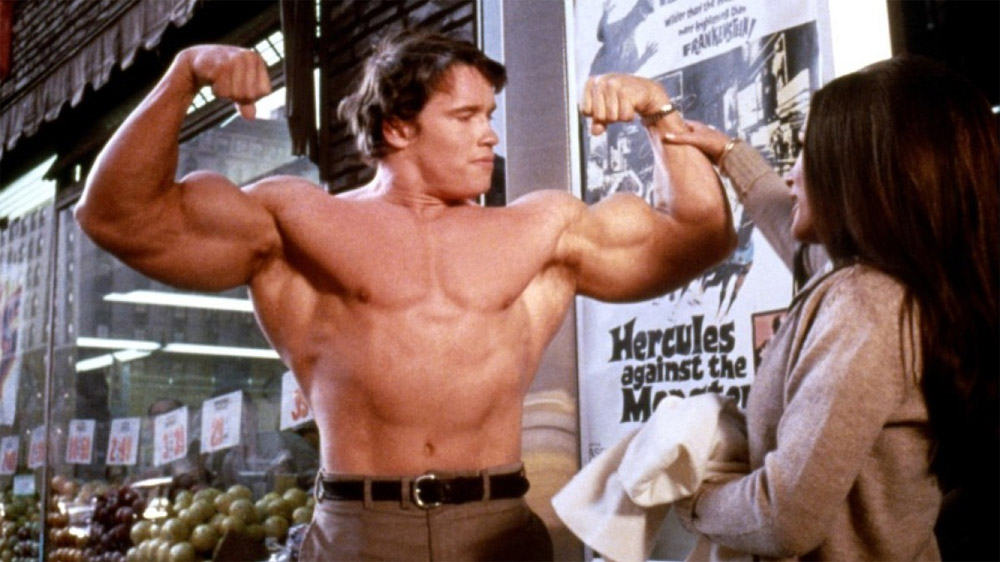
Hearing your recorded voice is one of the most awkward things there is. It always sounds so much different from what you expect from your own voice. It gets even worse if you hear it in an other language than your mother's tongue, and far more worse if you know that your fellow students will listen to it. Probably over and over again. And that they will point and laugh at you for sounding like Arnold Schwarzenegger (you have to watch this video). Well, the last bit might be a bit exaggerated, but this is basically what I felt after having heard my recording from when we were presenting and reviewing online dictionaries.

There was not much time to rehearse or write down what we were going to say. And naturally, we were all very nervous. To make things worse, I could not stop thinking about these infomercials on television with their over-excitement and over-fascination for their products. And then I could not stop pretending to be one of them. This is a transcript of what I said:
Hello everyone! We want to introduce you to OneLook, the Dictionary Search! Okay, at first it really looks scary and very ... white. And this is why we do something very important in the beginning: we change the background color! So let's change it to pink. Now it looks much more friendlier, doesn't it?

Okay, so we have several ways to look up a word. For example, you can just put in the word, or you can put in the end or the beginning of the word. Or maybe, when you are just solving a crossword puzzle, you can type in the first and the last letters and it will provide you with a solution. But we will just stick to the basics and type in 'bird'. Okay, Christine, what is this all about?

Okay, but what about the following situation: I have a definition or I want a synonym for something ... Christine, eh, sorry, Suzanna: do you have a solution for this problem?

So that's really great, but in conclusion: what are the several positive things about OneSear-- eh, OneLook.com?

Okay, and the negative aspects? Maja, do you know any negative aspects?

So, all in all, we can say: take one look at OneLook!
I have to admit that talking like that made things a bit easier and more fun, but it made me concentrate less on my speaking. With my grammar and my choice of my words, I am quite satisfied though. It was not overly impressive, but I think I used a nice variety of sentence structures and talked quite fluently. There is definitely room for improvement, but after the first shock of hearing my voice talking English, my grammar and word choice were one of the more pleasant parts of this kind of experiment.

Less pleasant was my pronunciation. There were a few words that I pronounced horribly and in a very German way, like "dictionary" or "aspects". I now fear that I might be always talking like that and that it was not just out of nervousness. Prior to hearing myself, I had actually thought that my pronunciation had improved a while ago. Having now being proved the opposite, I will definitely record my English-speaking voice more often and work on getting rid of the vibe of a Hercules in New York (no, really, you have to see this video) in my pronunciation.

Thursday, October 17, 2013

"I cannot knot!"


While we were talking about pronunciation and the silent "k" in certain words today, I couldn't stop thinking about this scene from one of the Winnie the Pooh movies. I actually never really watched or read the Winnie the Pooh series or films or books, but I often heard that there are always brilliant puns in them. This is one of them, dealing with the words "not" and "knot".

Friday, October 11, 2013

How Spaghetti Westerns turned me into a Movie Addict


I never was a big fan of watching movies. I knew that fantastic stories would be told by them, but I never had the patience to sit through a whole movie without thinking "why am I staring at a screen without doing anything?" at one point. It's not like I didn't like storytelling at all - I love going to the theater and getting sucked into a certain atmosphere. Unfortunately, a film never had managed to do this before. But then I started forcing myself to watch the big classics during the summer and I finally came to realize that it was not my lack of patience - I was just watching the wrong kind of movies all the time.

In yesterday's class, when we were introducing ourselves to our fellow students, I had mentioned the biggest trigger to my sudden love for movies: spaghetti westerns. Basically, these are westerns by Italian directors, most famously by Sergio Leone who is actually the iconic director in that department. There are quite a few differences between American and Italian westerns, most importantly in the way of storytelling. There is a very nice interview with the the iconic actor of the spaghetti westerns Clint Eastwood, in which the basic differences are explained briefly. (And Clint Eastwood mocking John Wayne's - the American icon of westerns - way of speaking is priceless!)


The first western I watched was the first part of the most famous trilogy in the world of spaghetti westerns: A Fistful of Dollars (1964). In my opinion, it is not the best part of the "Man with no Name"-trilogy, but as an entrance to the world of spaghetti westerns, it caused me to have a culture shock: The looks were different from anything else I had ever seen before in a movie. There is a perfect harmony between the landscapes and the interactions of the actors. Every scene seems to be a perfectly composed painting. Everything was done in a very minimalist way, like the dialogues were kept very short and the expressions (or the lack of expressions) of the characters told so much more than words could have. All these things made the storytelling straightforward and clear in a very unique way. This added a beautiful kind of tension to the climax and also the rest of the film. There was nothing too much or too less of.

But a Fistful of Dollars was only a mild introduction in comparison of what was about to come: the following two parts of the trilogy, namely For a Few Dollars More (1965) and The Good, The Bad and The Ugly (1966), were even more mind-blowing. They were also composed perfectly, but you could also really see that they had learned from their experiences. Also, the soundtrack by the musical genius Ennio Morricone finally caught more attention, and became part of the director's way of composing a picture of every scene. For example, here is the scene before the climax (which is, by the way, even more dramatic) of The Good, The Bad and The Ugly, which is still to this day considered one of the best movie scenes and music ever made.


In my opinion, it is safe to say that no other westerns - nor Italian nor American nor Spanish or whatever ones - ever reached the quality of the "Man with no Name"-Trilogy. Certainly, there still were some good ones, like Two Mules for Sister Sara or The Big Gundown, but, in my opinion, it never managed to establish the atmosphere the trilogy has. Surprisingly, also the newer westerns from nowadays could copy it. It seems it not about to the new technical equipment, but the establishment of a certain atmosphere. It just isn't the same. And this results in me watching these three movies over and over again, and never getting tired of it.

Spaghetti westerns not only waked my interest in watching movies, but also on how films are composed and what emotions can be triggered by the way a scene is built. I hope that I keep my motivation up to look deeper into the science of movies. The following might sound cheesy, but I am incredibly happy that westerns came into my life. And thus, it is proven that I was not joking when I told you all that I was obsessed with westerns. It is truly deep love.

Thursday, October 3, 2013

Restart!

(illustration: Ericka Lugo)

Hello everyone! I guess this is a "Welcome Back!" from the summer holidays and a fresh start into a new semester. Are you motivated? I am motivated! For how long? I don't know! Maybe it's also just the coffee talking!

Over the long but beautiful summer, I had enough time to actually comprehend that I had not passed the first year of university. Naturally, it made me sad at the beginning but now I am almost enthusiastic about starting over again with the experiences I made last year in mind. Everything is less frightening without the worries of being a first-time-student, and being already used to the mess university is sometimes makes everything much easier.

During our first English lesson today, I tried to remember what my expectations for university were last year. I remember that I thought that English would be a piece of cake, because I always had good grades in school and never had to study. Now I feel embarrassed for telling Fiona once in one of our first lessons last year that I would be able to study vocabulary by just looking in which context they were used in a sentence. I also remember feeling quite self-confident for having written my first homework in a few minutes on a, in my opinion, quite a high level. And also how that self-confidence dropped significantly when I got the corrected version back. I also had to think about having started studying for the first exam only a few days before it took place, and how desperate I got the more time passed. And how disappointed and disillusioned I was when I got a barely positive grade for it. So basically, I went from being on a high horse to hoping for a passing grade.

I think the most important thing you get to know in university is your individual way of studying efficiently and the courage to try out different ways of doing it. There is no general recipe for anybody and there's rarely one ultimate solution. For example, how to study new vocabulary is still quite a mystery to me. However, writing summaries of lectures in my own words proved to be the best way of dealing with lots of information. I also had to realize that over all the ways to study, time is the most important factor. And that procrastination gets even worse the less time you have on your hands. I think that learning how to keep information in your head in the long term is crucial for passing university. It seems quite obvious, but that studying is not just about keeping busy with the subjects in any way was quite an enlightenment.

Maybe I am not in the right position to provide wisdom to first-time-students because it is not that long ago that I was one myself. But these are a few things I wish people had told me a year before. Well, maybe people did tell me but I didn't understand. But now having that in mind, it should become a good semester for me. For now, I am looking forward to it.

Sunday, June 23, 2013

Culture Days: America and Ireland

source: society6
Last week must have been quite exciting for most of us students. Not only was it ridiculously hot, this week was also filled with final exams and sudden attacks of unexpected studying. But the past week was also spent with preparations for our Culture Days, which would be a two-days event filled with English students happily talking about aspects of their teacher's culture. In our case, we had a really nice mixture of Irish and American culture presentations.

I was really nervous before I had my own presentation about Bobby Sands. Normally, I'm not scared of talking in front of an audience, but I hadn't held such a presentation for a long time. I didn't even had the heart to go to the first bunch of presentations on Wednesday afternoon, because I felt like I wasn't prepared enough. In the end, I was rehearsing my presentation in front of my cats for about two hours straight, in which process my voice almost went missing. Luckily, when I arrived at university to hold my presentation, I was still in rehearse-mode and so I could go fluently through my text without spending too much thoughts on how nervous I was.

After my presentation was done, I finally could let go and watch these of my fellow students. Unfortunately, I couldn't watch as many as I wanted because I had two exams the two following days, but I at least managed to watch a few more than required. These were:

Ireland: From Emigration to Immigration by Alexa L.
Abortion Law in Ireland by Andrina D.
Video Games in Ireland by Artur S.
The Irish Film Industry by Dunja D.
Hill of Tara by Nadine D.
This is Friz! by Sandra L.
Languages of Irish Travelers by Kristina T.
Poetry in Irish Schools by Cornelia K.
The Influence of James II on the Irish by Julia B.
The Integration of Islam in Ireland by Alexander H.
Witchcraft in Ireland by Sabrina K.
Comics Books and Superheroes by Lucie B.
Amelia Earhart and Bessie Coleman by Orsolya C.
Hurricane Preparedness by Claudia S.

For our final oral exam we have to pick five of these topics. The ones I chose are the following:

Video Games in Ireland (by Artur S.)
I knew I would pick this topic for my oral exam as soon as I saw the title because I like playing video games. However, my knowledge about the history of videos games is only based on the "big ones" (America and Japan) and so I was most surprised to hear that Ireland's contributions aren't that unimportant in this industry.

The Irish Film Industry (by Dunja D.)
I really liked Dunja's presentation about the Irish film industry because she managed to give us a brief overview without attacking us with too many year numbers and hundred of names. She really waked my interest.

This is Friz! (by Sandra L.)
I simply had not heard of Fritz before, and I really want to talk about art.

Poetry in Irish Schools (by Cornelia K.)
Cornelia's presentation was my most favorite. She provided perfect examples and explained everything in a very calm and direct matter. It also made me think about how Austria's schools deal with poetry at a young age.

Witchcraft in Ireland (by Sabrina K.)
I like the mysterious vibe that comes from this topic. I'm happy that Sabrina chose to focus on two particular examples rather than explaining witchcraft from a dry historical view.

I think our Culture Days were very exciting and great. It was just too bad that it took place in a week full of exams. This took our chance of relaxing and just watching the presentations. However, I really hope that we will do something like that soon again or that at least the next SUK2-class will organize it as well. The whole event was the perfect opportunity to get to know these countries' culture better.

Friday, June 14, 2013

50 Years ago, the First Woman Went to Space


Yesterday morning, when my radio alarm went off, the first words I heard were "today is the 50th anniversary of the first woman ever being in space". I was still quite sleepy and impressed at the same time, when I realized that they were referring to the soviet cosmonaut I'm having a presentation about next week in Russian class. Her name is Valentina Vladimirovna Tereshkova and -- you might have guessed it already -- she was the first (official) woman ever being in space.

It was the period of the space race in which America and the Soviet Union competed about the most developed space program, which resulted in the most ridiculous and dangerous experiments. Almost everybody knows about, for example, the Russian dog Laika that was sent to space but never came back. There were a huge amount of failed experiments on both sides which would be made public only several years later. After all, neither America nor Russia would have admitted mistakes or failure.

Interestingly, Tereshkova was not a "real" cosmonaut. She was working in a textile factory and parachuted for in her free time. When main space engineer Sergej Koroljov formed plans on sending a woman into space -- after the soviet cosmonaut Yuri Gagarin successfully became the first man being and returning from space -- Tereshkova was chosen over 500 female candidates for her knowledge about parachuting and for deriving from a proletarian heritage. She underwent intensive cosmonaut training, including weightless flights, rocket theory, spacecraft engineering and many more.

On 13th June 1963, Vostok 6 launched into space. She orbited the earth 48 times and stayed in space for almost 3 days, which was the longest stay in outer space at that time. Unfortunately, she experienced nausea for most of the flight, which main engineer Koroljov was not pleased about. It is said that this was the reason why her flight was not made public immediately. Furthermore, it took further 19 years until the next woman would be send to space.

Today, Tereshkova is 76 years old. When she was invited by Vladimir Putin for her 70th birthday, she stated that she would love to go to Mars, even if it would mean to never come back to earth. This among several other reasons is why I think she must be an incredible person. Her life story is very impressive and she seems to be a strong woman which we never can have too few of.

Thursday, June 6, 2013

Movie: Hunger (2008)


Sometimes, when I want to get into a certain topic that I am interested in (or at least should be for university), I like to start getting into it by watching a documentary or video adaption about/of the topic. This is also what I did when I had started researching about the Irishman Bobby Sands for my culture essay for English class. I felt that the political issues that surrounded his actions were a bit hard to understand. So I hoped that I would get the grasp of a basic image about these when I would be watching a movie or documentary about it.

The most recent and popular adaption of Bobby Sands' hunger strike in 1981 is the movie "Hunger" (2008), directed by Steve McQueen. It describes the hunger strikes in an unpolitical way, showing pain and fear on both sides (in this case: by both the guards and the hunger strikers) equally with using only a few words throughout the whole movie. McQueen rather focuses on delivering the right atmosphere by using strong images. A good example for such are the scenes in which fully-armed guards and naked prisoners fight each other brutally, both trying to gain control over the other. In contrast, a dialogue of 20 minutes between Bobby Sands (portrayed by Michael Fassbender) and a priest is shown in the middle of the movie, which, by the way, was filmed in one single take without changing the perspective of the camera. It is the exact opposite of the first third of the movie and mostly consists of skirmish between these two. The last third of the movie is showing the process of Sands' turning more and more into skin and bones, by using again strong and depressing images, this time ones of a broken man. The movie ends with Sands' death, not showing the aftermath and political consequences.


In my opinion, "Hunger" is not only the best adaption of the Irish hunger strikes, it is also an outstanding movie in general. The movie does not go for the heartstrings, but sticks to simply showing strong and disturbing images. Every further spoken word would be one too much, because the uncommented pictures speak for themselves. Even the dialogue between Sands and the priest requires to look at the picture itself and not focusing what they actually say, rather focusing on what they do not say. Creating an atmosphere and emotions in this quite theatrical way is what really astonished and touched me about this movie. It might not have cleared the fog about the political background in my head, but it left me incredibly impressed.

Wednesday, June 5, 2013

Learning Languages Online - Busuu


We all know that learning a new language is not as easy as it seems. Studying a language at university might be one of the most effective ways to do that, however, there are of course many more ways to accomplish that. People want to learn languages faster, easier and without much effort. For those, books like "Learn Russian in 30 Days!" or "Becoming the Master of the Spanish Language in less than 14 Days!" are written and published, although most of these look more promising than they are in reality.

And then there is Buusu. I heard about it in a commercial on television and they instantly got my curiosity. Basically, it's a community connects native speakers with language learners. People can share their texts or audio recordings and get these corrected by native speakers.

I have tested it for about a week with Russian as my learning target as an additional exercise to university. As soon as I had signed up, I had access to several lessons relating to basic topics such as family or emotions. For each lesson, I could choose between watching a slide-show of pictures with topic-related vocabulary on them, reading and writing dialogues and -- most exciting -- chatting with native speakers.

Unfortunately, it is the most basic thing about this community that had disappointed me: their lessons, which are supposed to take you step by step to a higher language level, are translated by and therefore dependent on the online dictionary PONS. Their dependence on PONS is one of the major reasons why their computer-generated lessons are hardly helpful, because the vocabulary is often taken out of context, often providing a wrong translation.

I decided to take the opportunity to interact with native speakers instead. When I had shared a little introduction text with my Russian knowledge from university, I almost instantly got several suggestions and corrections on my text which were incredibly helpful. In the end, I had even found a tandem-partner who wants to study German while being a Russian native-speaker.

All in all, Busuu might not be the place to learn a new language starting by zero, but definitely the right place to find language-interested people from around the world who are very happy to help you on your way of learning their native language.

Monday, April 22, 2013

Tasty Search Engines and Asparagus


I can't remember how I stumbled upon Yummly.com. But what I know is that it was a good thing, because it makes life in the kitchen so much easier. Why, you ask? Because this page is a search engine dedicated to food. You type in one random ingredient and it delights you with the most delicious recipes from other pages around the world. As soon as you've typed in your ingredient, you can limit the results by choosing further ingredients or ingredients that should be avoided, choose which holiday the recipe should suit, which taste it should have (e.g. salty or spicy), which allergies you have or which diet you stick to, which techniques should be used (e.g. stir-fried or baked), which cuisine it derives from and even more.

I tested it a while ago when I had bought a bunch of asparagus. I had never prepared asparagus before, so I was pleased when I found this recipe for oven-roasted asparagus. It is really simple as it mostly consists of washing, cutting and putting the asparagus into the oven, however, the result was a very tasty snack. And, furthermore, I learned some new vocabulary from this recipe:

to lop off (to chop/cut off)
to pat something dry (to hit lightly -- e.g. with a cloth -- until it's dry)
to drizzle, e.g. with oil (to moisten)
Don't skimp! (Don't use too less!)

I am very happy that there is a search engine for recipes, because I usually tend to buy food without thinking of how to prepare them afterwards. So this is definitely a good way to avoid throwing away food because it gets bad before you think of what to do with it and it most certainly helps finding new recipes and techniques.